Cuba: The Raucous Caucus’ Road Trip
March 2011
Come join Mary Lou Patterson and Daphne Muse on our 850 Mile road trip in Cuba
Daphne & Mary Lou in Bicycle Taxi in Downtown Havana |
Introduction
I wrote this very long piece in an effort to bring you along on every possible step of this 850 mile journey Mary Lou Patterson and I took in Cuba. While several of you have gone over the years, some multiple times, others have yet to make the journey. So stir your Mojito, brew your coffee or steep your tea and imagine you were in the car, on the beach and at the homes where we spent time with some truly remarkable and absolutely generous people.
Magical Meridians
The seeds for my magical meridians were planted in 1956 by my sixth grade teacher Mr. Brown at Crosby Noyes Elementary School in Washington, DC. He set my geopolitical trajectory masterfully using meridians, longitude, latitude and population figures as the basis for teaching us math and history. Our classroom was filled with maps and images of European explorers (Vasco de Gama and Columbus) set on colonizing the world. But there also were images of people who created lives for themselves in places that called me to sit at their tables. I’m amazed that my “magical meridians” have become realities for me: Suriname, Tanzania, South Africa, Mozambique and most recently Cuba. Early on, I came to realize that my spirit really thrives, when I am close to or below the Equator. I left sixth grade with dreams of becoming a cartographer. In bebopping around the country and globe, I’ve listened to stories and shared breathtaking moments with remarkable people and astonishing moments in nature. These journeys also have served as transformative milestones for me.
Beyond the century’s long drives for conquests and colonization, I’ve long held that people always have been curious to know what’s over the mountain or the next swell in the sea. I’ve read about the journeys of the not so usual suspects: Hannu, an ancient Egyptian who made the first recorded expedition during Egypt’s second dynasty (almost three thousand years BC) and Ibn Battuta a 14th Century Moroccan who charted more than 75,000 miles of travels. Legend has it that in the 10th century the Vikings set sail to North America with a woman explorer named Gudrid Thorbjarnardottir.
The forthright spirit of my daddy was with me every step of this trip and this is a trip he would have been so proud of me for taking. I continue to remind myself that visiting someone else’s country is like going into another person’s home: They furnish it to their taste or finances, may not cook like your momma and their family drama plays out against a different historical and cultural backdrop. Cuba was my most recent foray into navigating life beyond America. In French, there is a colloquial saying “Mai toi bien (Make yourself better.).” Our eight day, more than 850-mile road trip in Cuba made me better. Juxtaposed between the Atlantic Ocean to the East, Caribbean Sea West and Gulf of Mexico North, Cuba’s social, political and environmental landscape are fascinating. Over the course of five decades, I’ve read some of the history, listened to the fabulous music and followed the intriguing politics.
Cancun was our point of departure and it is a bit over an hour from Cancun to Havana. The flight from Cancun reveals just how gorgeous the Gulf is, for the plane cruises at an altitude low enough to see both the Gulf of Mexico and Caribbean Sea. You approach the island at Pinar del Rio, the northern most point of Cuba. We flew on Habana Airline on a Russian made plane that was easily forty, probably fifty-years- old with engines that hummed soothingly. But the seats were so tightly positioned, the one in front of me was right up in my nasal passage and I’m short. But I have to say, anybody who can keep forty-year -old planes and 60- year- old cars running is a mechanical genius.
We spent our first day in Havana in the home of Cachita and Martin. Longtime friends of Mary Lou’s, their kindness and generosity had a real mid-20th Century southern welcome to it. They have two twenty-something children living at home and struggling with some of the same intergenerational challenges we do. With a zero tolerance policy for drugs, that dynamic does not seem to come into play in the life and culture of the country’s youth.
The Ultimate Hookup
My role as a Rumelier and judge for the US International Cane Spirits Festival, combined with six years of writing for the Education Division of the Commission for Major League Baseball, was a double play in Cuba. But the grand slam home run was making this first-time journey with my cherished friend of more than 40 years Mary Lou Patterson. Mary Lou learned Spanish/Cuban, from twelve Cuban classmates, while studying at Patrice Lumumba University in Moscow (1960-1966). She was part of the first cohort of eighty-two students from around the world to enroll at Patrice Lumumba University. She also married a Roberto Camacho, a Cuban and lived there for several years before returning home to NY. Two of her three daughters and her grandson Roberto were born in Cuba. A pediatrician for more than forty years, she practices at Cornell Medical Center in Manhattan. The trip was filled with conversations that segued from Cuban Spanish to Russian (spoken with a Latin rhythm and Cuban accent) to English, because of Donis Cotin and Amelia Brito, two of her Cuban classmates from Lumumba University who live in Havana and travelled with us. For the past five decades, Mary Lou has spent time with family and friends in Cuba. After she divorced her husband, she remained close to his family, especially Estrella Camacho her mother-in-law. Our primary reason for the journey was to celebrate Mama’s 100th birthday!
The Rest of the World is at the Table and I hope Cuba won’t permit itself to be eaten alive
We often distinguish ourselves by the enemies we make. While the US continues to behave like a petulant child, the rest of the world, including the Armenians, Italians, Finns, Canadians and people throughout the Caribbean, Central and Latin America, come there for business and pleasure. The French are establishing vineyards; Israeli’s bottling juice from locally grown fruits; Qatar has invested in the building of a $75 million dollar resort and there is a brand new Mercedes dealership in Havana.
Recently, a group of Cuban engineers supervised the building of the Thu Thiem Mega Bridge over Vietnam’s Saigon River. The Cubans have trained thousands of doctors and dispatched them to countries around the world including Mozambique, South Africa and Haiti. Former Oakland and now deceased architect Ken Simmons served as a design consultant for Freedom Park in Tshwane (Pretoria) South Africa where there is a wall dedicated to the 2,000 Cubans who committed their lives to the fight against apartheid.
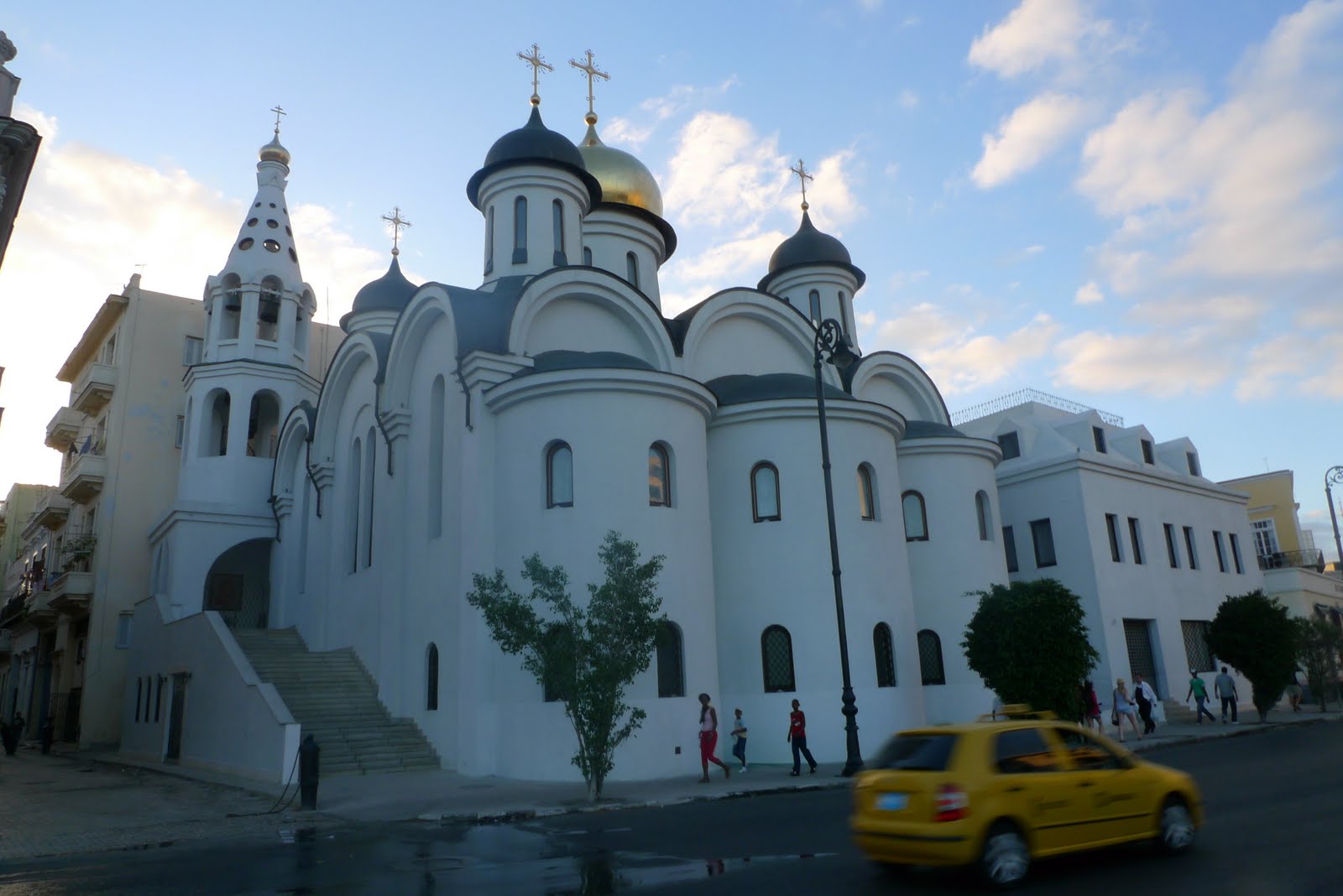
The intersection of faith, maintaining a secular society and growing socialism are of real concern to many. The Russians recently completed an exquisite orthodox church in Old Havana and there are synagogues in several regions including Havana, Cienfuegos and Camaguey. There are about 1500 Muslims in Cuba, but no mosques. Santeria, a combination of the Yoruba religious practices, Catholicism and indigenous rituals, continues to have a significant following. Christians are also vying for a role in Cuba’s future. On the flight from Cancun were Cubans returning from the states laden with goods, a contingent of mid-Western farmers and several European and American tourists. I was stunned by the level of tourism in Cuba, the sophisticated state of the art networks of transportation to get them around and the B&B’s and beach front hotels to host them.
On the Matters of Race and Racism
Almost every culture uses some construct to “manage” oppression and the masses. There are restaurants, hotels and beaches that still are not open to Cubans. As someone who was born Up South (Washington, DC), spent some summers and my college years in the Deep South and worked in the Civil Rights Movement, I was appalled by the segregation, a practice that goes across the color line in Cuba. According to highly-acclaimed Cuban novelist Leonardo Padura, “ Racism -- like prostitution, corruption and religion -- didn't disappear because of a socialist magical spell: Although diminished and quiet, it survived among the people, and today, in fact, in certain nonofficial circles, its incidence in the complex narrative of contemporary Cuban society is openly debated.” In the works of profoundly prolific poet Nancy Morejón, race and national identity remain ongoing themes. Her “Mujer Negra” has become a much anthologized classic and her voice and vision, like that of many Cuban artists, musicians, writers, poets and filmmakers, are heard and seen around the world.
I observed the dynamics of race reflected in the pecking order of staff at the hotels, restaurants and other public spaces. It was especially stomach turning in the ubiquitous, tourists souvenirs of thick lipped-mammy’s sold at fairs and shops. Mary Lou and I both addressed this pervasive stereotype with artists and craftspeople. Their response was “the tourists like it.” We were adamant that we didn’t. While there are clear parallels, the paradigms Americans use for analyzing, deconstructing and going post racial cannot be used as a template for other cultures. There are just too many historical, cultural and economic variables at play. Having lived, discussed and fought to overcome racism for more than seven decades, there are times the discussion lingers in my throat as though I’m trying to swallow an elephant. The pathology of it far outweighs the discourse related to how to eradicate and get beyond it. But I also saw families in which the hues ranged from café au lait to chocolate and darker. And students across the racial spectrum were dutifully on the way to school and university. Cuba does not tolerate dropouts and has an astonishing literacy rate that is hovers around 99.8 percent for those over fifteen.
Riding in a Russian Death Trap: This trip wasn’t tied to our expiration date
Clearly, it wasn’t our time to go. The day after arriving, we took off in a 47-year-old Moskovich (Russian made car the size of a peanut shell) to Guanabo, a beach town about 45 miles South of Havana. Joel was supposed to drop us at Donis and Amelia’s in Havana, but a tangle in communications resulted in him taking us all the way to Guanabo. The doors on the Moskovich did not align, the windows were tinted pink, you could see the road through the floorboards and the exhaust fumes pumped in through the gear shift. The car never got above 20 miles an hour and Joel drove the entire trip in fourth gear. The fumes were so intense and pervasive that my lung flushing mantra became Al Gore. Exhaust from cars, trucks and busses are a major problem, even though Cuba is otherwise very environmentally conscious and has more than 360 species of birds, the world’s smallest bat and maintains a healthy coral reef. Along with laws governing education, health care and sports, environmental laws are included in their constitution.
After finally meeting up with Donis and Amelia in Guanabo, we put our luggage on a horse taxi and walked from the center of town to their home. Donis and Amelia are Cuba’s first geologists. Donis has the comedic timing and wit of Richard Pryor and a most deft culinary hand. He prepared us a marvelous meal and we spent much of the evening deep off into round after round of “state of the world” angst and farce. Guanabo, like much of the other area we traveled, looked like a tropical version of rural Georgia when I used to spend time there in the 50s and 60s visiting family: people toiling (cutting back growth with machetes and plowing fields with oxen and mules), gathered on porches and beating clothes with a mallet at the river. Beating clothes with a stone or washing them in the river may look ethnically authentic on a post card, but it’s time to end romanticizing the toil of women’s work. I’d love to see some of the world’s major philanthropist endow a washing machine initiative. As the repurposing geniuses they are, I can only imagine what they would do with our discarded washers.
On the ride back to Havana from Guanabo, I had a fabulous moment in a taxi where the driver was exclusively playing old school soul music. At one point, one of my all time favorites the Grandmaster Flash and the Furious Five’s classic “The Message” with the chorus “Don’t Push me cause I’m close to the edge” came on and I started bustin’ a move right in the backseat of the cab. The driver pulls up to the light and puts out his new school moves (in the seat) to this old school groove and it was an instant party right there at the traffic light. Mary Lou asked him why he wasn’t listening to Cuban music. I looked at her and said for the same reason we listen to Cuban music at home. The cabbie kept the old school grooves playing all the way back to Havana.
Dual (Dueling) Monetary Systems
We returned to Havana the next day and made a quick swoop through, stopping to rent a Peugeot at the Havana Libre and change money at Hotel Nacional. The rental agent was a consummate professional, explaining the contract in the clearest of details and treating us with the greatest respect. At the Nacional, the line to change money was an hour long, so we had to find another source. Navigating the bureaucratic quagmire is daunting. But that’s the nature of how things function in most countries in the 21st century.
Cuba has two monetary systems: CUCS (Convertible Pesos) and Cuban Funny Money (Cuban Pesos). CUCS hold a much higher value than the Cuban Pesos. Dem CUCS drove me coo coo and I had the most difficult time ever trying to negotiate transactions involving dual currencies. The only thing dollars are good for are changing into CUCS or funny money, unless you want to go black market and I dare not go there. We finally located a place that was open, but the exchange rate was $80.00 CUCS for every $100.00 US. While people from the rest of the world can use their credit cards and cell phones, we cannot because of the embargo. Although toilets are common, toilet seats are not and toilet paper is a precious commodity indeed; I kissed a roll upon returning home.
On the way out of the Nacional, we took a few minutes to look at an art exhibit. There was a huge portrait of an angel with a gynormous wingspan made up of a dozen baseball bats on each wing. Cubans worship at the “Basillica of Baseball” with the same fervor as others embark upon a spiritual pilgrimage. While Cubans started playing in Major League Baseball in the late 19th century, I did not know that Roberto Estalella, a black Cuban, entered the Majors playing with Albany in 1934 and went on to play with the Philadelphia A’s and Washington Senators.
The Hotel Nacional sits in splendid grandeur like a lover languishing over a freshly-consummated affair. The pride of the Cuban “Auto Army” adorns the circular driveway and many of them are painted like day glow popsicles on wheels. Referred to as “Yank Tanks” or Cacharros, several are maintained in pristine almost museum like conditions. I saw a turquoise Cadillac Eldorado Brougham with which I wanted to bejewel my body like a brooch. The skill and ingenuity required to maintain forty, fifty and sixty- year- old cars, results in a Moscovich engine in a Studebaker; DeSoto with a diesel engine or a Chevrolet with the engine intact.
As we left the Nacional, we drove along the mesmerizing Malecón, a sea wall that hugs the coast of Havana. Along with people fishing and swimming, you hear musicians playing while others gather to lounge on or dance along the edges of the wall. Parts of Havana are seductively gorgeous and have been restored by heritage funding from the UN. Other parts look like Detroit, bombed out by urban decay. But the country is very clean; I’m convinced because of repurposing and pride. The Cubans repurpose everything from car parts to building materials. In Havana, the next door neighbor fashioned an ice cream making machine from old air conditioning parts and a pulley. I had to remember my home training when offered a bowl of orange pineapple, not a flavor I was willing to give up calories for, and accept. Not only did I have a bowl for dessert that evening, I had one of that superbly scrumptious, velvety smooth, delight for breakfast the next morning.
With the exception of the old world architecture of the Spanish, some of which still survives, I was stunned by the more contemporary structures. I call it Russian Gulag public housing. But that Gulag architecture withstands hurricanes. You work with what you got. With rare exception, the embargo has made it difficult for Cuba to build at an aesthetic that harmonizes with the topography of the island. I noticed that most telephone poles were made from cinderblocks, making it more difficult for them to fall during hurricanes. Some of the new tourist enclaves do reflect more of the Caribbean aesthetic.
Beyond Havana
Our more than 850 mile road trip took us south along the West Coast of Cuba. It provided mystical moments of engagement with the pristine waters of the Caribbean which on that day was draped by stunning blue skies. In a place with endless miles of open sky, my imagination went into overdrive. Mary Lou navigated that little Peugeot, with the tenacity of the New York driver she is, on roads filled with people walking, horse taxis, bicycle taxis, people on bikes, farm equipment, 60- year-old cars, brand new Mercedes, semi tractor trucks, tour and public buses. On many of the back roads, there were also lots of Europeans training for cycling marathons. Coming from a pedestrian friendly city, I would have been honked off the road after two blocks. As we traversed in and out of towns along the way, we saw lots of raised bed gardens flourishing alongside acres of sugar cane coming up out of the red clay soil beaming back up at the sun. Cubans grow green, so their waters are not polluted with fertilizers or other farm-related chemicals.
For the next six days, as the conversation flowed from Cuban Spanish to Russian to English, I marveled at being in the company of three black people mixing it up with a seemingly effortless cross cultural and linguistic ease. I speak about 60 seconds of Spanish, no Cuban and know two salutations in Russian. But eight days of immersion and intense listening allowed me to pick up on certain nuances. In a small town near Camaguey near Trinidad de Cuba, we stopped to get a beer. Donis and I went into a dank “booth in the back in da dark” pool hall/club. In the back were two women grinding freshly slaughtered meat. Donis ordered two beers and began to engage in banter with one of the women. The woman looked at me while pointing at the sky and said, “What planet is he from?” I so understood every word she said. The woman and I roared. As we traversed the roads from Havana to Camaguey, we saw several stalls where people were selling fresh produce and a yummy, stick to your teeth, peanut brittle that took me back to my childhood.
At times, Mary Lou, Amelia and Donis broke out singing in Spanish and at others in Russian. Donis also insisted that I was his long lost cousin from Baracoa, a region at the southern tip of the island settled by the French who left Haiti in 1791 when Toussaint L’Overture led the Haitian Revolution. I told him he’d have to take that up with my folk from rural Southwest Georgia, because we didn’t know anything about Haitian or Cuban roots.
Fidel continues to affirm his long held stance that Cuba is an Afro-Caribbean nation. Africa is in the music, religion (Santeria) and language. But Spanish influence dominated the food in the homes and restaurants where I ate. I was rather surprised that my palate was not challenged by bolder herbs and spices, as well as a greater diversity and range in what came on the plate. At a restaurant near the Havana Club Rum Museum, we did have a most succulent lobster filled with the taste of the sea.
But I was also grateful to get good meals, though surprisingly, I ate far more meat than I do at home. Coming from a sugar-driven economy, the Cubans also pour it deeply and it was not uncommon for three heaping teaspoons of sugar to find its way into a demitasse cup already filled with condensed milk. I begged off several times, although surprisingly, I did like the bold brew of the Cuban coffee although I’m not much of a coffee drinker.
Botanical Bliss
During March, the country was rather arid and had not quite bloomed into the lushness I associate with places like Guadeloupe and Trinidad. Much of the drive was framed by views of the majestic Sierra del Escambia, a mountain range in the central region. On the road to Cienfuegos, Donis must have asked seventeen people for directions and he got ten different answers. But he just loves to talk and my word, he had to talk up almost everyone we saw along the road.
We visited the Botanical Gardens in Cienfuegos, which I can only imagine are a veritable visual and fragrance filled paradise when the orchids are in full bloom. Woven throughout trees and often in the company of Bromeliads, some of the three hundred species of orchids on the island were just beginning to announce their arrival. Because plants have not been bred out of their fragrance, the scent of orchids and roses dances across the air in a way that lets you know nature thrives. As we entered the gardens, Donis asked the attendant if he had eaten lunch. The man gave Donis a rather incredulous look at first and then curiously answered, “Si.” Donis said, “Now we can talk. I find it difficult to talk with people who have not eaten.”
Donis and Amelia had prepared a fine lunch of a divine pickled fish which we ate at the restaurant. We ordered Mojitos, but this time before the order I had to pull the rum card. In my entire life, I only sent a meal back once and never a drink. We had to send back Mojitos at two different restaurants in Havana; each contained an eye dropper of rum. Cuba was the last place I ever expected to send back a Mojito. In Johannesburg while dining at Moyo’s in the Park, I had to tell the server that I did not want my Mojito made with Vodka, which is the way they noted it on the menu. We informed the servers in Havana that we really like the taste of rum. But my rum (ron) run would be vindicated later on up the road getting generous pours of a series of regional rums.
Stumbling on a Culinary Gem and Creative Couture
Our final destination for that day was Trinidad de Cuba, an exquisite place whose beauty remains imprinted on my mind. We spent the night at the hospedaje (B&B) run by Alfred y Marģarita. For $25.00 a night, we got two great meals and the warmth of a family. The next morning, Margarita had to go to the doctor and Alfredo prepared breakfast and cleaned up the kitchen. As we were about to depart, he bent down and tied the ties at the end of my safari pants noting he did not want me to fall. Chivalry was very apparent throughout and my grey hair also served me well. On a public bus in Havana both a soldier and a young man got up and graciously offered their seats.
Our foray to the beach after leaving Trinidad de Cuba was far too brief, but the ocean restored my road weary soul and its salt fine sands and azure waters were another testament to the environmental commitment of Cuba. Those waters have such a healing power and we pretty much had the beach to ourselves. One can only hope that the growing number of tourists will respect and protect the access they have to these aquatic cathedrals.
Throughout the course of my stay, there were several times I was mistaken for Cuban. In Mozambique I was mistaken for Mozambican and in South Africa, South African. In 1970, while way up in the bush in Suriname visiting with the Djukas the tribal leader asked my interpreter if I was a “civilized” Bush Negro. I guess I have the body and build that transcend lots of racial/ethnic boundaries. And in Trinidad de Cuba a woman walked up to me and began speaking to me in Cuban (mucho rapido Cuban Spanish) and I said, “No hablo Español.” She kept insisting that I did and then the man with her chimed in as though to say are you ashamed of yourself, refusing to speak Spanish. I then simply said in my boldest English that I did not speak Spanish and they finally relented.
Trinidad de Cuba looks and feels like a movie set. There is something so absolutely surreal about so many aspects of it from women sitting in windows crafting exquisite linens to the Casa-restaurante Sol-Ananda we stumbled upon in search of more of the linens and lovely Guayaberas worn by men throughout the Caribbean, Mexico and Latin America. Guayaberas are just so classy and I love seeing men wear these finely crafted shirts.
Sitting right across from the town square, in a traditional Spanish style building, Casa-restaurate Sol-Ananda is like no other restaurant I’ve ever seen. A woman architect renovated the building and has turned it into a page right out of Laura Esquivel’s 1989 novel Like Water for Chocolate (Como agua para Chocolate). The doors appear to be at least twenty feet tall and the ceilings even higher. You enter into a room where five or six tables are set with exquisite handmade linens, breath- taking stemware and china from the late 19th and early 20th century. In the second room is a table set for twenty-four and the third is appointed with three tables, a fifteen foot armoire that appears to be eight feet wide and a brass bed made up with linens just as fine as those on the tables. I see my seventieth birthday up in there! It was clearly designed for romance, seduction and creating magical memories.
They were in between services, so we got to spend more than an hour talking food, literature, world ideas and just laughing hysterically with the chef and maitre d’. They made us a frozen daiquiri that rocked our world and the menu had a culinary sophistication that reflected it was both Cuban and global. Also on the square was a shop where a young woman was designing and making some very au currant clothing mainly from hand woven linen and crochet. In boutiques in Paris, New York or Milan, her work could hold its own. My granddaughter, a budding designer, was thrilled with the dress she received.
Growing the Vision of Socialism in the 21st Century
Sustaining the change that comes with a revolution and continuing to envision where it can lead a country demands persistent engagement with citizens across the generations. Small private business were eliminated in Cuba in 1968, as part of the then "Revolutionary Offensive." But Cuba is undergoing an economic adjustment plan designed to examine and produce the next steps in moving the country forward. It was ratified by the ruling Communist Party at its Sixth Congress, in April 2011. More than 80,000 Cubans have applied for self-employment permits. More than 29,000 have been delivered and 16,000 under review. The government is also grappling with bloated conditions in the state sectors. Plans are afoot to reduce the workforce and eliminate more than 500,000 jobs.
In Cuba, under socialism, there will never be space for “shock therapies” that go against the neediest, who have traditionally been the staunchest supporters of the Revolution; as opposed to the packages of measures frequently applied on orders of the International Monetary Fund and other international economic organizations to the detriment of the Third World peoples and, lately enforced in the highly developed nations where students’ and workers’ demonstrations are violently suppressed. The Revolution will not leave any Cuban helpless. The social welfare system is being reorganized to ensure a rational and deferential support to those who really need it. Instead of massively subsidizing products as we do now, we shall gradually provide for those people lacking other support.
Raúl Castro's April 2011 address to the 6th Congress of the Communist Party of Cuba
Discourse at the Dinner Table
You learn so much sitting at the dinner table with an everyday family as they discuss the demands of their day and remove the dust of toil from their clothing and souls. Hygiene is at a high standard and I was taken to task for only showering once a day. I’m highly conscious about conservation and it was difficult to break with that routine.
It was reassuring to hear Martin, in whose home we stayed in Havana, talk about participating in the community meetings inspiring the current national discussion. While not all Cubans are participating in the discourse driving new ideas, many are vested in continuing to translate socialism into an even stronger working nation. Free education and health care go a long way in strengthening a social order. The Latin American Medical School continues to train thousands of doctors, many of whom are working in seventy countries including Mozambique, Haiti and Pakistan. Their generosity and struggle for social justice cross so many boundaries, internally and beyond. Let us remember, they extended their hands to us during hurricane Katrina and the Bush Administration dissed the gesture, at the expense of people drowning in the misery of bureaucracy and natural disaster.
One young man we met spoke of his dissatisfaction with Cuba and desire to come to the US. I think in any given society there are always people who want to leave for political, economic and social reasons. That is not unique to Cuba, although it does manifest itself in an historical change that displaced powerful people who had the country on racial and class lockdown. I strongly urged him to examine current conditions in the US, before making his decision. He could be fleeing into something well beyond what he imagined. I also noted how much a country needs its young to remain vested in building out into the best nation it can become.
Through Cuba’s history and the way the country has re-envisioned and restructured itself, the young are experiencing the benefits of the revolution. But they also have a responsibility to take that history seriously and be as engaged as possible in envisioning and strategizing, in concert with their elders, the future of Cuba. There are those who are just as distracted by blinding bling as American youth and not really aware of what it takes to make a country work. In the course of a young Cuban man grumbling about going to discussions with his father about the future of Cuba, I looked him straight in the eye and told him Mary Lou and I would not be sitting at his parents’ table had we not engaged in changing the social order of our country. I also told him that taking his freshly pressed first CD back to be aired by Hip Hop DJ’s is one of the benefits of our engagement in social justice. Water is free in Cuba and the price of rice has not increased in decades. There is concrete evidence of growing class disparity through the cars people drive and who has crossed the digital divide and who has not. Three of the four homes in which we visited had computers. But those people either hold positions that require them to have the technology or are the beneficiaries through relatives or friends from abroad. But cellphones were eeerrrrywhere in the hands of almost eeeerrrrybody.
I think we are at an historical juncture where all nations could benefit from a working Intergenerational Council that keeps the country historically informed while navigating its way to the kind of sustainable progress that benefits the people and its overall strength and productivity. I am also a firm believer that people have to send a resolute message to their country’s leaders that ten to twelve years are enough (with rare exception) and training new leaders coming up the ranks is essential. As we continue to witness in this very moment, leaders who stay too long turn sour. In far too many instances, the divide between those holding power and those being ruled deepens and widens into an unbridgeable chasm. But then, that’s how many in power want it to remain.
Fidel Castro’s tenure defied some of those odds and Cuba has remained relatively stable, but the air is thick with change(s). In my soul, I hold and enduring respect for Fidel Castro, Che Guevara, General Dreke and others instrumental in the 1959 Revolution. While standing on Plaza de la Revolución, where at times more than four million have gathered to hear Fidel and President Raul Castro, I was moved by being in such an historical place. But for me the translation of some of the ideals of the revolution in the day-to-day lives of people appear to be unfulfilled. The vast acreage of cattle ranches, cane fields and pristine beaches combined with solid environmental policies and practices (except the fumes spewing from autos) makes the island rife for picking. What does it take to develop a country responsibly? Who should be involved in that process and how does title to “ownership” work in a country grounded in Socialism, while continuing to evolve its vision, policies and practices?
Do you know the way to Camaguey?
The next morning we departed for Camaguey. It is a mind-boggling, chaotic layout of winding, blind alleys, as well as forked streets that lead to just as confusing squares. The old Spanish style architecture dominates and the homes have amazing atriums that look up into the big open sky. Some of those atriums are filled with beautiful plants or people stuck in time sitting on priceless antiques that survived the Revolution.
Our arrival in Camaguey was rife with anticipation. Would Mama be able to withstand the demands of the day? Not only did she withstand them, she thrived. We stayed with Israel and Yanexis in a home probably built in the 60s. Yanexis is a twenty-five –year- old doctor practicing at a rural clinic two hours from where they live. Her father Israel is a volleyball coach who lived in Ethiopia and Venezuela where he’s coached teams. While thousands of Cubans have journeyed into exile, others have traveled the world, worked abroad and returned home to the country they love.
Water is shut off at different times of evening, as one of the many steps of conversation in Cuba. Having soaped up, I turned on the water only to realize that it was past water curfew. That night, I went to bed a sticky mess. I was the first up and in the shower that morning. From then on, I kept a spare bucket of water, just in case. But the inconveniences become small, when the warmth of a family showers you with their welcoming generosity and you’re clear about a country struggling to keep its center and vision, while trying to navigate its way forward and maintain its soul.
The party for Mama was sweet, tender and oh so memorable. Mary Lou, her daughter Evelyn (also a doctor in the US) and lots of relatives and friends came to celebrate her at a restaurant on the main square in Camaguey. Children, young people and seasoned elders joined in honoring a woman who started her life working as a servant in a wealthy home, certainly not an uncommon story for a woman of her hue and class. At one point, Mama dug her finger deep into the cake and swiped out a chunk of frosting. When she reached for her third piece of cake, they told her no. I winced, for at one hundred, I figure you have earned the right to do almost anything.
The local media also came to cover Mama’s status as a centenarian. After the party, she regaled us with stories of some of her naughty moments growing up and it is clear that the love she receives from her adoring daughter and care-taker Olga, her granddaughter Evelyn and her daughter-in-law Mary Lou have helped her reach up the ladder to aging with dignity and a wicked sense of humor. Throughout our journey, I saw several women who looked as though they’d lived long deep lives. One in particular appeared to have lived many lives across multiple centuries. She had this somewhat testy stance that said, “What could possibly be coming up the road next, as multiple forms of transportation from horse taxis to sleek tour busses whizzed by?”
Cuban TV was a mix of their version of the Grammy’s, Korean and Latin American telenovas, CSI and Amy Goodman’s “Democracy Now.” The telenovas are huge and cross the gender and generational divides. Roads are well maintained and I don’t remember any potholes. With the exception of an occasional sign reflecting the spirit of the revolution or reminding citizens of the importance of education, the landscape was not beleaguered with billboards and advertising.
Hyper Sexualized Girls and Women
Upon returning to Havana, I became more aware of hyper-sexualized girls and women sporting sexually proactive slogans in English, strategically placed on parts of their anatomies. It was as over the top there as here. But, at a concert we attended at Conjunto Folkloirco Nacional de Cuba I was just fuming with outrage at the sight of a barely six-year-old wearing a puff pillow of a skirt that fit right under her behind. She paraded back and forth moving her body as though she was in constant sexual motion. Like so many places around the world, sexually explicit behavior, trafficking and prostitution are rampant. Like here in the US, it was not uncommon to see women wearing pants that appeared to be painted on and that they had to peel themselves out of. At an art fair, in one of those moments that translates across language, I saw a pimp attempting to get an older white man to secure the services of a prostitute. I’ve seen that moment often enough to recognize it, even though I may not know the language. The elderly man said, “No.” I wanted to go over to thank him, but realized the pimp probably would have “whupped” all upside my head.
But the concert also featured a masterful performance by conguero Tata Gṻines; his performance energized and soothed my fuming spirit. There is so much music beyond the Buena Vista Social Club. Several groups of children ranging in ages four to about fifteen put on pageantry and danced, with many of them appearing to old souls dancing in young bodies. Other groups performed and one included a man who was a dead ringer for Bay Area base player Calvin Keys. We left when the sound system caught fire.
A Most Fabulous Rum Connection
Along with celebrating Mama and meeting with José Antonio Olmedo Soteras, former director of the Museum of Rum (Museo del Ron) in Santiago de Cuba, I interviewed four women for my Grandmothers Going Global project. Ameila, Mary Lou’s classmate from Patrice Lumumba and travel companion, served as my translator for the interviews. In 1959 at 19, Amelia was invited to the Seventh Festival for Youth and Students for Peace in Vienna, Austria. Upon leaving Austria, they went to the Soviet Union and from there passed through Spain on the way back home to Cuba. In Madrid, she had dinner with Che Guevara who had recently returned from India and Congo! Talk about dining with history. She sent me photographs from that dinner. I urged her to send them to Cuba’s National Archive.

Amelia, peeping through on top row, at dinner with Che and friends 1959, Fotografo --Luna, 36, Angel, Madrid, Spain |
Sharing Utilitarian, literary and cultural Resources
For almost four decades, I’ve taken things to leave when I travel both domestically and internationally. Multiple requests came from various people asking me to take things, but space and weight prevented me from taking much of what was offered. I did take drum sticks, a copy of Bay Area journalist Belva Davis’ Never in My Wildest Dreams, dental floss, clothes and money. Davis interviewed Fidel Castro twice and I asked Amelia to donate her book to the Biblioteca Nacional "José Marti Library. The money was donated to the pediatric wing of a hospital in Camaguey and street musicians. Other donations, including drum sticks, went to a school for disabled children and a library. The increased restrictions for weight make it even more difficult to take books, but I always take along at least one, even when traveling domestically. I’ve left them in hotels, put in the hands of skycaps, on planes and presented as gifts to people who have hosted me.
Oh, and the Cubans are deft on drugs. Those cute little drug-sniffing Cocker Spaniels at Jose Marti Airport are vigilant and Cuba has a zero tolerance drug policy, which I think goes a long way in keeping a country stable. And, although we’ve adapted a different strategy for addressing HIV-AIDS, Cuba’s policy stipulates that those who are infected be quarantined. While we may not agree with their stance, it has kept the disease from running rampant in a place ripe for such to happen. In 1992, Cuba developed a project to obtain an HIV/AIDS vaccine and continues research, with great commitment and very limited resources, to develop a cure.
I languished at tables filled with regional rums (Puerto Principe, Coronilla and Ron Varadero) where the conversations segued between our comparable and contrasting difficulties. My discussions with Cubans were very forthright about how challenging it is to try to uphold the fragments of Democracy in America in a climate rife with racism, homophobia, class and gender warfare, economic voodoo and religious zealotry. They were interested in knowing more about Obama, talking baseball and the earthquake in Japan, about which we knew no more than they did for it happened just as we were leaving Mexico. It was covered in Granma and on their nationally televised news program. I would not be at all surprised if the Cubans send doctors to assist with medically-related challenges from the earthquake. They were there almost from the moment in Haiti. Upon leaving Camaguey, I found it impossible to say goodbye; something I’ve not had difficulty doing before.
In another one of those moments of intervention by the Universe, as we were returning to Mexico Mary Lou sat next to a young woman who was having trouble completing her documents for customs. It turned out the woman spoke no English or Spanish, only Russian. She had flown from Moscow and was on her way to Mexico to study in an immersion program. We don’t know what she would have done without Mary Lou, for at customs Mary Lou had to translate from Russian to Spanish and got the customs official to help the young woman understand that the three month visa she downloaded from her computer wasn’t going to fly: thirty days was the best she’d get. With an over sixty, Black American woman translating for a young white Russian, so a Spanish speaking customs agent in Cancun could decide the Russian’s future, demonstrates one of the many ways related to the skills required to interact adeptly in the global village.
Cuba became a term of endearment for me and I couldn’t say goodbye
Teary and eager to know what’s next for Cuba, the departure became even more difficult. As people on the plane were issuing up their goodbyes, I told Mary Lou I just couldn’t. My mementos and memories arrived intact, including my prized bottle of eleven-year-old Anejo Superior Ron Santiago De Cuba, which according to the former director of the Museum of Rum is the best. But Mary Lou and I poured a libation to our ancestors and served up a both the Superior Ron Santiago De Cuba and the Havana Club, when she came to Oakland to join me in our report back. Without evening blinking, we both concluded that the Havana Club hit all the right notes on our palates, slid down our throats with the greatest of ease and channeled its way on into our spirit ever so smoothly. I’ve been “Dreaming in Cuban” and looking forward to making good on the multiple invitations from Donis, Amelia, Yanexis, Cachita, Martin, Israel, Mama and the grandmothers I interviewed. But before returning to Cuba, I have to go to Bulgaria to pursue a recurring dream that began in my early twenties, about a saxophone player blowing tunes over waves at the Black Sea. I’ll also interview a series of grandmothers while there and invite them into my network of Grandmothers Going Global.
I was the beneficiary of the tremendous generosity of people who craft their lives from the seeds of so many difficulties and manifest the power of abundance in their truly tender and fierce hearts. Cuba indeed made me better, deepening my well of gratitude; for that, I am eternally grateful.
|
Mary Lou Patterson reporting back at Oakland gathering
|
Poet Nicolas Guillien
|
Russian Orthodox Church in Havana |
|
Restaurant Mural in Camaguey
|
|
Daiquiri days in Trinidad de Cuba
|
|
Telephone pole near Donis and Amelia’s home in Havana |
|
Cachita and Daphne at Rum Museum |
|
Boudoir dining room at Sol-Ananda Restaurant in Trinidad de Cuba |
|
Dayan, Martin and Cachita at home in Havana |
|
Daphne, Martin and Cachita
|
|
Olga, MaMa and Mary Louise |
Evelyn (Mary Louise's daughter)
|
Our neighborhood in Camaguey |
Photos courtesy of Mary Lou Patterson and Amelia Brito
©2011Oakland, California
Daphne Muse